Commercial demolition is priced the way construction is priced: by scope, conditions, and time. Five factors drive most of the number you will receive: the size and type of the structure, hazardous materials, site access, the disposal and salvage plan, and the schedule.
We have quoted and completed demolition projects across Saskatchewan since 1978. In our experience, a large difference between two quotes often comes down to scope or assumptions, not just the contractor’s rate. Learn to read the scope, and the prices become easier to compare.
This article breaks down each cost driver the way we would explain it to a property owner sitting across the table, then covers how to compare bids without getting surprised by an invoice later.
Key Takeaways
- Structure size, type, and construction method establish the baseline cost.
- Hazardous material assessment and any required abatement need a defined scope and budget.
- Site access affects equipment choice, scheduling, and labour costs.
- Disposal fees add up. Salvage and concrete recycling may reduce costs, depending on processing costs and recovery value.
- A lower bid may exclude work included elsewhere. Compare scopes, exclusions, and allowances before comparing totals.
How Do Size and Structure Type Affect Demolition Pricing?
Bigger structures generally take more machine hours, more trucks, and more disposal volume, so square footage and construction type set the baseline of a quote. A wood-frame retail building presents different work from a poured concrete industrial facility. A steel-clad warehouse behaves differently from a masonry school. The structure helps determine the equipment, and the equipment affects the clock.
In our experience, clients often estimate their project by the building’s footprint alone and are surprised by what sits underneath it. Slab-on-grade concrete, foundation walls, underground utilities, and old storage tanks can all add removal work that is invisible from the parking lot.
A site walk helps put the drawings in context. It can reveal access restrictions and visible conditions that the paperwork does not show, while records and further investigation help establish what is below ground.
A common mistake is assuming a small building means a small project. A modest structure on a cramped downtown lot can cost more to remove per square foot than a large building on open industrial land. Access and logistics can outweigh the apparent simplicity of the building.
Interior Versus Full Demolition: Two Different Scopes
| Factor | Interior / Selective Demolition | Total / Structural Demolition |
| What is removed | Selected finishes, fixtures, non-structural walls, and building systems | The structure, with slabs and foundations included where specified |
| Typical reason | Tenant change, renovation, or rebranding | Redevelopment or an end-of-life building |
| Site conditions | Nearby parts of the building may remain occupied | The demolition work area is secured; the final site condition depends on the scope |
| Cost drivers | Dust control, protecting what stays, and working around tenants | Equipment hours, hauling, disposal, and any required excavation |
| What to clarify in the contract | Protection, abatement responsibilities, cleanup, and coordination with other trades | Abatement, hauling, foundation removal, backfill, and grading inclusions |
What Role Do Hazardous Materials Play in the Price?
Older commercial buildings may contain asbestos and other hazardous materials that need to be assessed before demolition. Building age can help flag the risk, but it cannot confirm whether a material contains asbestos. Suspect materials need appropriate assessment and, where required, sampling.
Any required abatement should be a defined scope with its own cost, appropriately trained and qualified crews, worker protection measures, and disposal arrangements.
One pattern we see is owners treating the hazardous material assessment as paperwork and then being surprised when abatement appears as a line item. The assessment helps establish the scope before work starts. Discovering a problem after mobilization can mean delays, additional visits, and equipment sitting idle while the next steps are arranged.
Expert tip: Arrange the hazardous material assessment early, before finalizing the demolition schedule. Allow time for sampling, results, required notifications, and abatement. Certain high-risk asbestos processes in Saskatchewan require at least 14 days’ advance notice to Occupational Health and Safety.
Silverado offers both demolition and abatement services, which can simplify coordination. A single contract may reduce handoffs and make responsibility clearer, but the savings depend on the project. Whether you use one contractor or several, agree on the sequence, responsibilities, and handover requirements before work starts.
Why Does Site Access Change the Number?
Access affects equipment, and equipment affects the schedule. A wide-open industrial site may allow larger excavators to work efficiently with room for trucks and material sorting.
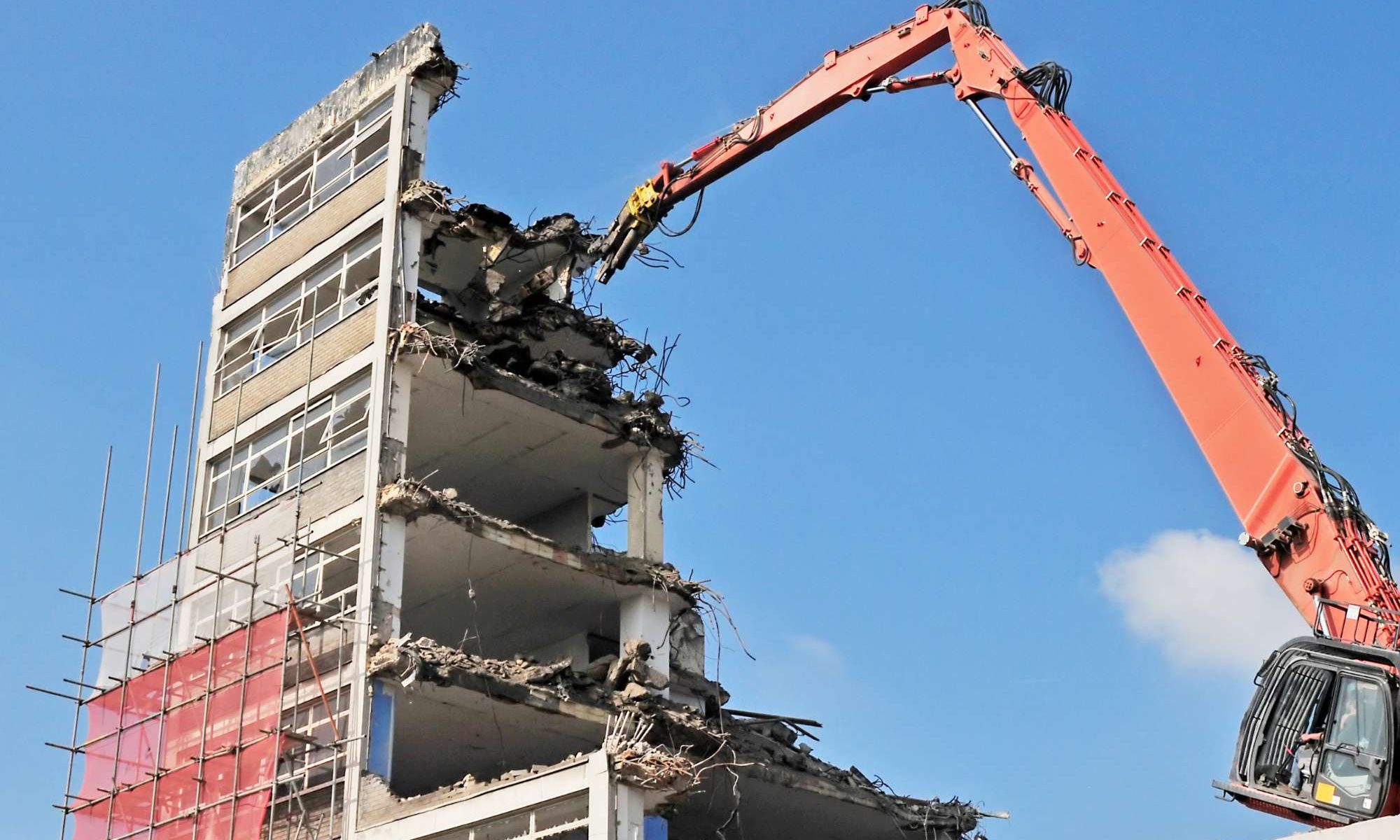
A downtown property with narrow lanes, neighbouring businesses, and limited haul routes may need a more controlled demolition sequence or specialized equipment. Depending on the building and available working space, that could include a high-reach excavator. The equipment may cost more per day, but a suitable demolition method can help manage both the schedule and risks to neighbouring properties.
Access planning is one place where an experienced demolition contractor earns their fee. On a downtown Regina site, the plan for getting debris out is as important as the plan for taking the building down. Lane closures need coordination, neighbours may need notice, and the haul route needs to account for municipal requirements.
| Site condition | Access consideration | Potential cost consequence |
| Downtown, tight access | Lane closures, neighbour coordination, and debris routing | Phased work, specialized equipment, and additional time |
| Industrial, open site | Ground conditions, truck access, and road weight limits | More efficient equipment use where conditions allow |
| Occupied building | Tenant operations, dust, noise, and separation from the work | Off-hours work, phasing, and containment |
| Rural or remote | Mobilization distance, water, and available services | Travel, setup, and servicing costs |
A common mistake is comparing equipment lists between bids without asking why each contractor chose that equipment. The machine that looks expensive on paper may be the one that keeps the job from running longer.
How Do Disposal, Salvage, and Recycling Affect the Total?
Everything that comes down has to go somewhere, and landfill tipping fees for mixed demolition debris are a real cost line. This is where a contractor’s recycling program becomes a budget question as well as an environmental one.
Structural steel, copper, and some fixtures may have recovery value. Suitable concrete may be crushed into aggregate for approved reuse on site or elsewhere. That can reduce hauling and disposal costs, but crushing, material quality, available space, and local requirements need to be considered.
Skipping salvage may look like a schedule saving at the start. Depending on the materials and disposal charges, it can also mean losing an opportunity to reduce the total cost. On other projects, recovery and handling costs may outweigh the benefit. Make that decision during the site assessment, while the materials are still accessible.
On projects pursuing LEED certification, waste tracking and recycling documentation may support construction and demolition waste credits. Confirm the project’s documentation requirements before work begins.
Expert tip: When you receive a quote, ask two disposal questions directly. First, are hauling and tipping fees included, or billed separately? Second, what happens to the concrete? A quote that excludes disposal is not directly comparable with one that includes it.
What About Permits, Utilities, and Scheduling?
Confirm demolition permit requirements with the municipality or local authority having jurisdiction. Application requirements, fees, and timelines vary between Saskatoon, Regina, and smaller centres. Other approvals may also be needed.
Permit fees are only part of the budget. A late application can delay the project, especially on a redevelopment schedule where extra weeks may add financing and property carrying costs.
Utility coordination is the same story with higher stakes. Before demolition, affected services must be safely disconnected, isolated, capped, or protected as required by the demolition plan and the relevant providers or authorities. This may involve utility providers and qualified trades.
Unclear responsibility is a common source of delays: the owner believes the utility arrangements are complete, the contractor believes the owner handled them, and the crew arrives before the site is ready. Assign responsibility for arranging and verifying the work in writing.
Scheduling also interacts with Saskatchewan’s seasons. Frozen ground can sometimes help equipment mobility on soft sites. Against that, deep cold, snow, heating, and containment requirements can add costs or slow the work.
If your timeline allows a choice of season, ask your contractor which conditions favour your specific site rather than assuming summer is always cheaper or winter is always more expensive.
A common mistake is treating permits and utility arrangements as either the contractor’s problem or the owner’s problem without stating it in the contract. Ambiguity does not save the fee. It can cost the delay.
How Do You Compare Demolition Quotes Fairly?
Compare scopes line by line, totals last.
When two bids differ significantly, check what each includes and what each assumes. One may exclude hauling, another may carry an allowance for abatement, and another may leave utility arrangements to the owner. Equipment, scheduling, overhead, and risk allowances can also explain price differences.
A fair comparison checklist:
- Does the bid include a hazardous material assessment, or rely on one supplied by the owner?
- Is required abatement included, priced as an allowance, or excluded?
- Are hauling, disposal, and tipping fees included or billed separately?
- Are slabs, foundations, underground structures, and tanks included where applicable?
- Is backfill or grading included, and what condition will the site be left in?
- Who arranges permits and utility work, and is that stated in writing?
- What recycling and salvage is planned, and who receives any recovered value?
- What happens if hidden conditions or additional hazardous materials are found?
- Does the contractor have appropriate insurance, current WCB clearance, and any safety certification required for the project?
- If bonding is required, can the contractor provide the applicable bond?
- What is the payment schedule tied to, and how are changes approved?
These checks matter because demolition carries substantial risk. Ask for current documentation rather than relying only on a website statement or a company’s years in business.
Experience matters, but a clear scope and current credentials are what let you compare the offers in front of you.
What We’d Recommend
Here is what we would do with a commercial property facing demolition in Saskatchewan.
Start three conversations early: arrange the hazardous material assessment, contact the relevant utilities to establish disconnection requirements and lead times, and schedule a site walk with a demolition contractor.
Then ask for a quote covering the scope you actually need. That may include abatement, demolition, hauling, foundation removal, excavation, backfill, and grading. Put the disposal and salvage arrangements in writing before mobilization.
One contractor offering demolition, abatement, hauling, and excavation services can simplify coordination. Separate contractors can also work effectively when responsibilities and handovers are clear. What matters is having an agreed plan, not assuming the gaps will sort themselves out.
Whether your site is in Saskatoon, Regina, or a smaller Saskatchewan community, local experience can help with permit coordination, disposal arrangements, and haul planning.
For the preparation sequence before equipment arrives, our guide to preparing your building for demolition in Saskatchewan walks through permits, utilities, salvage, and site access planning.
Frequently Asked Questions
What Is the Biggest Factor in Commercial Demolition Cost?
Structure size and construction type establish the baseline. Hazardous materials, access restrictions, foundation removal, and disposal requirements can then change the total substantially.
Can I Reduce Demolition Costs Through Salvage?
Potentially. Recovering steel, copper, and reusable fixtures, or recycling suitable concrete, can reduce disposal volume and offset some costs. The benefit depends on recovery value, sorting and processing costs, and how the materials can be reused or sold.
Are Asbestos Removal Costs Part of the Demolition Quote?
They may be included, carried as an allowance, or quoted separately. If abatement is required, make sure its scope, cost, and place in the schedule are clear before demolition starts.
Why Do Demolition Quotes for the Same Building Differ So Much?
Scope and assumptions often explain a large part of the difference. One bid may exclude hauling, abatement, foundations, or grading. Contractors may also use different equipment, schedules, and risk allowances. Compare those details before comparing totals.
Is Winter Demolition More Expensive in Saskatchewan?
Not always. Frozen ground may help on some soft-ground sites, while cold-weather operation, snow removal, heating, and containment can add costs. Ask which season suits the building and site conditions.
Do I Need a Demolition Permit in Saskatchewan?
Check with your municipality or local authority before starting. Demolition permit requirements and related approvals vary by location and project.
Who Disconnects the Utilities Before Demolition?
It depends on the service and local requirements. Utility providers and qualified trades may be involved. The contract should identify who arranges the work and how disconnection or isolation will be verified.
Talk to a Saskatchewan Demolition Contractor About the Whole Job
Our recommendation is simple: get a written quote that defines the work from start to finish. Know what is included, what is excluded, and how unexpected conditions will be handled.
Silverado Demolition Operations Inc. has been completing commercial and industrial projects across Saskatchewan since 1978 and offers demolition, hazardous material removal, hauling, recycling, and excavation services.
Request a consultation and site walk, and bring your redevelopment timeline. A clearly defined scope will give you a more useful budget and a better basis for comparing quotes.